“The First Saratogians” Opens at the Saratoga Springs History Museum
A Transformative Exhibit Exploring 10,000 Years of Indigenous History
Generously funded by the Alfred Z. Solomon Charitable Trust
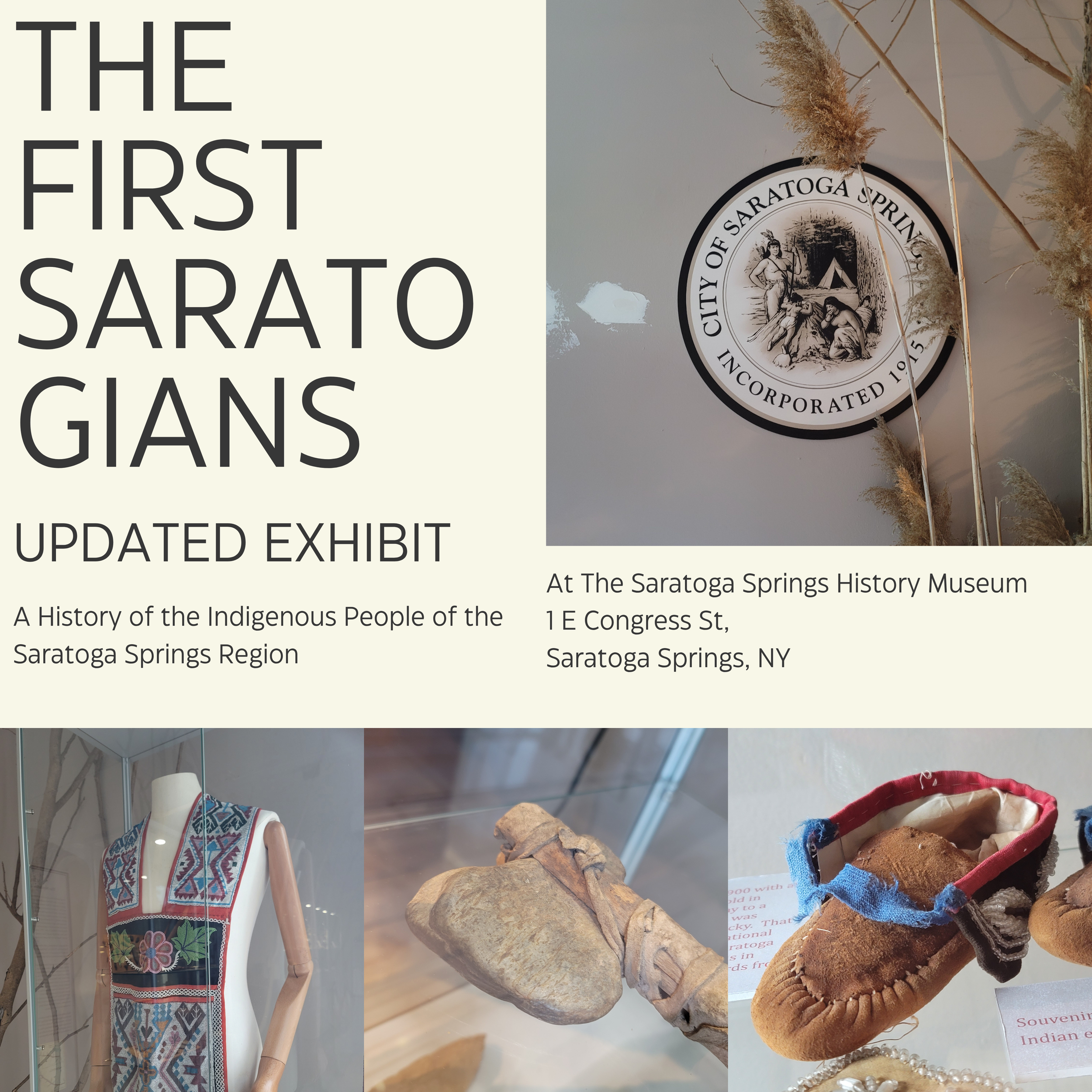
The Saratoga Springs History Museum is proud to announce the opening of First Saratogians: The Indigenous Peoples of the Saratoga Springs Region, a powerful and deeply researched temporary exhibition located in the 3rd Floor Gallery.
Now open daily and included with museum admission, this landmark exhibit invites visitors to step into over 10,000 years of history—an immersive journey through the lives, cultures, challenges, and enduring legacies of the Mohican, Mohawk (Kanienʼkehá:ka), and Abenaki peoples.
More than a historical display, First Saratogians is a collective effort grounded in new scholarship, cultural collaboration, and community dialogue. It presents over 300 artifacts from the museum’s own collections, alongside rarely told stories and long-overlooked perspectives that reshape the way we understand Saratoga Springs.
An Exhibit Rooted in Truth, Collaboration, and Respect
Created over a two-year period with guidance from Native scholars, educators, and culture-bearers—including the N’dakinna Education Center (Joe, Jesse & James Bruchac), Brian McCormack, Kay Olan, and Justin Crowfox Haner—this exhibition places Indigenous voices at the center of the narrative.
Their contributions shaped everything from interpretive panels to artifact selection to the museum’s updated Land Acknowledgement, which grounds the exhibit in honesty and respect:
“This area has been cared for by Indigenous people for more than 10,000 years.
The Mohican, Kanienʼkehá:ka (Mohawk), and Abenaki regarded the springs as a sacred place—an area of peace to be shared by all.”
The museum recognizes that colonial settlement forced many of these communities from their ancestral homelands, yet Native people remained, returned, adapted, and continued to sustain their cultural traditions, even throughout the rise of tourism in Saratoga Springs.
What You’ll Discover Inside the Gallery
🌿 High Rock Spring — Medicine Spring of the Great Spirit
The exhibit expands on the sacred significance of High Rock Spring, long before it became a tourist attraction. Learn how Native communities used the springs as a place of healing, ceremony, council, and cross-cultural gathering.
🌿 Indigenous Life Across Millennia
Through stone tools, pottery, tools of daily life, beadwork, baskets, and original museum artifacts, the exhibition explores:
Prehistoric life in the region
Trade networks stretching across the Northeast
Foodways, hunting practices, technology, and seasonal cycles
The profound relationship between land, water, and community
🌿 The Era of Colonization & Survival
Explore how Native peoples navigated intense upheaval: forced displacement, land dispossession, shifting borders, and cultural suppression. Despite attempts to erase them, these communities adapted, resisted, and persevered.
🌿 Leaders, Culture-Bearers, and Changemakers
Meet remarkable individuals whose stories shaped this region, including:
Kateri Tekakwitha, the Mohawk woman whose life and legacy have been interpreted across cultures
Sir William Johnson, whose relationships with Native communities were both influential and deeply complex
Sam Hill, an Abenaki guide and celebrated storyteller
George Crum, a chef of Native and African ancestry whose culinary legacy still reverberates
🌿 The Truth Behind Saratoga’s “Indian Encampments”
This section explores how Indigenous people—facing discrimination and exclusion—used tourism-era “Indian Encampments” both as economic strategy and cultural expression. It reveals their role in resisting erasure and asserting identity in a rapidly changing Saratoga Springs.
🌿 Representation, Stereotypes & Public Memory
Through art, advertisements, tourism materials, and public symbols, the exhibit critically examines:
How Native peoples were depicted (or misrepresented) in the 19th and 20th centuries
How popular culture shaped public understandings of Indigeneity
How imagery was used by Saratoga itself—including a look at the origins and issues surrounding the city seal
This is history told not just through artifacts, but through accountability.
Why This Exhibit Matters
In an era calling for accuracy, inclusion, and cultural respect, First Saratogians offers an essential space for learning and reflection.
It challenges long-held myths, corrects outdated narratives, and restores Indigenous presence to the forefront of Saratoga’s story—where it always belonged.
Director James Parillo describes the exhibit as:
“A deeper look at how Native Americans shaped this region, how they adapted through centuries of upheaval, and how their stories live on today.”
This is not a closed chapter—it is a living history.
Plan Your Visit
📍 Location: 3rd Floor Gallery, Saratoga Springs History Museum
🕒 Open Daily during regular museum hours
🎟 Included with Museum Admission
Whether you are a lifelong local, a student, an educator, or a curious visitor, First Saratogians offers an opportunity to rethink the foundations of Saratoga Springs—and to honor the people who first called this land home.
Come experience this transformative exhibit and join us in celebrating the resilience, wisdom, and ongoing legacy of the Mohican, Mohawk, and Abenaki peoples.
We thank our Native American partners who advised and guided us through the two year process of constructing this exhibition: N’Dakinna Education Center – Joe, Jesse and James Bruchac; Brian McCormack of Thunderhawk Living History School; Kay Olan and Justin Crowfox Haner.